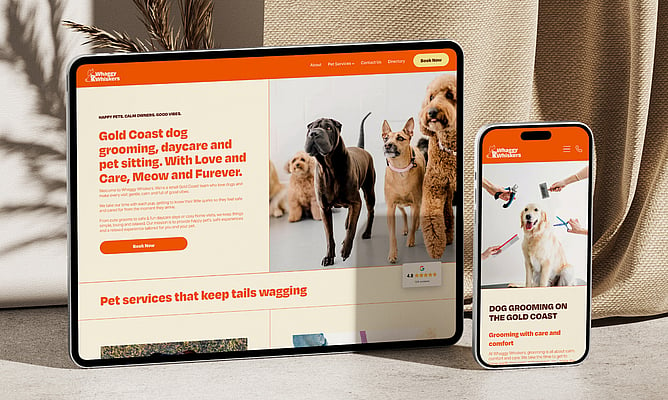
Amanda from Harbrow Creations caught our eye on LinkedIn, where she'd written her own case study on her redesign of the Whaggy Whiskers website. It walks through what the new site actually does for the business: more online bookings, fewer phone calls, less admin for a busy team.
Many designers finish a build, post a screenshot and move on to the next job. The step that gets skipped is going back after launch, asking the client what's actually changed and writing up the results. That's the part a future client most wants to read before they hire anyone. We jumped on a call with Amanda to talk through the build, the thinking behind the site and how she makes the value of her work easy for potential clients to see.
Meet Amanda
Amanda Harbrow has been a graphic designer for 15 years. She cut her teeth in big corporate roles at major Australian retailers and marketing agencies, freelancing on the side the whole way through, until four years ago she went out on her own and started Harbrow Creations.
The Brisbane studio runs fairly lean: two in-house designers and a part-time copywriter. They specialise in helping service businesses that are three to five years in, the ones who have a few design pieces floating around but nothing that holds together.
"Everything's a bit inconsistent," Amanda says. "We come in and look at what they currently have and create a new system for them, so everything is consistent and templated for the team to use. And part of that journey is taking the DIY website to a professional-looking website."
Her usual world is construction companies, mining, financial advisors and consultants. So how did a dog daycare end up on the books?
A project that started at a networking event
"Through a networking event," Amanda says. She met Montana, the owner of Whaggy Whiskers, and they simply stayed in touch. "We'd been chatting for about a year. It wasn't me chasing the work. She slowly realised their website could actually do a lot more for them rather than all the manual work."
Whaggy Whiskers is a busy Gold Coast pet care business offering doggy daycare, grooming, dog walking and pet sitting. The old website had been built through their point-of-sale platform, which Amanda credits as a powerful system for running the shop, though far less flexible when it comes to building a website.
"It didn't have a lot of design flexibility, and the owner found it really clunky to update anything," she says. Before touching a thing, Amanda spent serious time on research to make sure the booking system the business relied on could carry over to the new site. "I didn't want to delete everything they'd already spent so many hours on."
One clear goal, then the words
Every decision on the project traced back to a single sentence: help visitors understand the services quickly and guide them towards booking online.
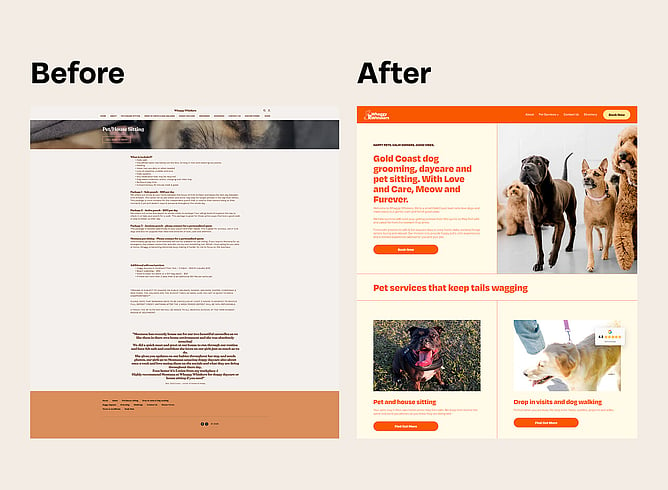
The old site made that hard. It was heavy with terms and conditions, the homepage led with a map and some award badges, and most bookings still happened over the phone. That meant admin for a team who'd rather be hands-on with the dogs.
So Amanda started with the copy.
"The content was a little bit dry. I brought in my copywriter and we decided what needs to go, what can stay, and added a bit of fun," she says. "That's what really changed everything. We made sure the design reflected the sense of humour, the tone of voice we were trying to match. We started with the messages before we even jumped onto the design."
You can see the result all over the live site. "Happy pets. Calm owners. Good vibes." A promise of care delivered "meow and furever". It's playful without trying too hard, and it sounds like Montana.
"I really wanted the website to feel like her energy. She's so bubbly, she's so funny, and I needed that to translate to the website."
Built for customers, not the owner
The trickiest conversation in any redesign is the one where the designer points out that the owner's favourite things and the customer's favourite things are different lists. Amanda had that conversation about the homepage.
"I kept trying to say, this is built for your customers, this is not built for us," she says. The awards stayed on the site, just further from the spotlight. The new homepage leads with services, personality and a booking button, so a first-time visitor can understand the offer at a glance and a regular can rebook in seconds.
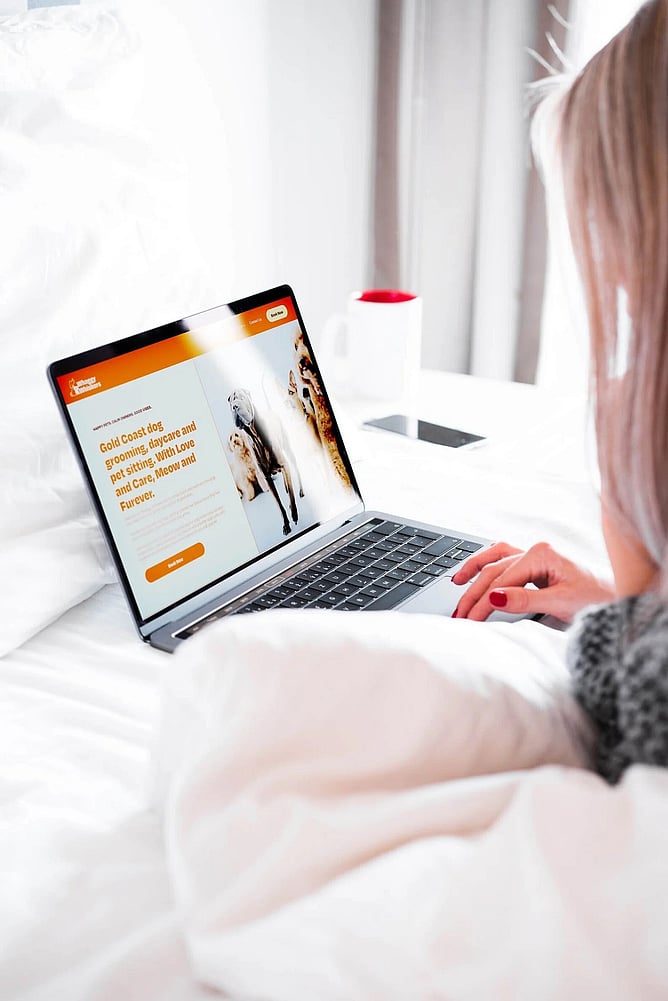
That principle extended to what she kept. Whaggy Whiskers had earned over 100 five-star Google reviews, so Amanda made sure that social proof shows up for every visitor rather than hiding on one page. "I want to show that we don't just discard everything that's been built over the years."
And she went through every call to action on the site. "All the CTAs on the old website just said contact us. We changed everything to book online now, wherever it made sense, instead of a generic contact us."
The early results
The site launched in autumn 2026, and while the hard numbers are still coming in, the direction is already clear.
"She said, oh my god, we got so many compliments about our new website," Amanda says. "But the big shift is taking off a lot of the manual phone bookings. It's easier for the customer and it's easier for the shop."
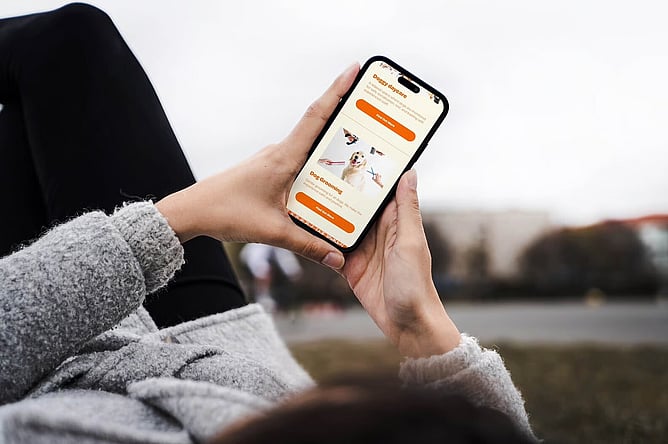
Then there's Montana's reaction to the design itself. She came to me and said, " I never expected this. It really brought the Whaggy Whiskers branding to life."
Amanda plans to update her case study once the booking data lands and we'll be watching for it.
Why she wrote the case study
Once the site was live, Amanda wrote the whole story up: the challenge, the strategy, the booking integration, the mobile-first thinking and what it all means for the business.
"I wanted to show business owners that we don't just jump in and redesign everything for the sake of it," she says. "We listen to your goal, define what's working and what's not. We're here to help you translate your message to your customer easily, so you can get more bookings."
Her advice for designers who want to prove their value goes further than "write case studies".
"Always listen to your customers first. Let them talk and share as much as they can, because that is the story you can use. Your case study is not about what you did. It's about how you helped the customer transform their experience for their own target market. We're not just about designing pretty things."
The AI question
We had to ask. AI website builders are pitched at exactly the kind of small businesses Amanda designs for, so where does she land?
“…it's always pretty generic. You see a certain colour palette or layout and you know straight away it's from AI. It doesn't feel personal. It doesn't have the empathy to talk about the real problems of the target market."
She's genuinely positive about AI as a starting point for businesses without any budget. And the Whaggy Whiskers project shows what the difference looks like in practice: hours of interviews with Montana, a brand voice built from her actual personality and design decisions traced back to a business goal.
"If you want something looking generic, go with AI. If you want really good design, go with a real human."
Why Rocketspark
Amanda tried the big names before landing here. Squarespace, Wix, WordPress ("we won't talk about it").
"Every platform can do what I want to do. As a designer, I can design anything from any platform," she says. "But when I need help, other platforms send me an FAQ page. Sometimes I literally just need a human for five minutes. I couldn't get that from any other platform until I found Rocketspark."
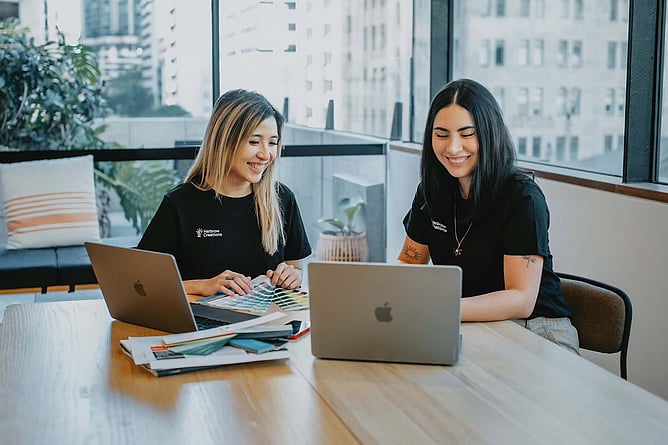
Four years on, it's still the reason she recommends the platform to every client. "The team always gets back to me within 24 hours. And everyone I train, they always say this website is so easy to use."
Handing over a site the client can run themselves is part of the service. Montana is already in there tweaking words herself, and Amanda's slowly nudging her towards blogging.
Want to write a case study like Amanda's? Grab our free client story kit: the interview questions, the template and how to get the numbers. And if you've got a Rocketspark project you'd love to share, we'd love to hear from you.