You've probably been noticing more and more AI-generated answers at the top of Google search lately. They pull together information from across the web before you even see a list of websites.
Maybe you've also been hearing words like "AI Overviews", "AEO", "AIO" or "GEO", and wondering if you need to rethink your whole approach to getting your business found online.
Fortunately, SEO for small business in NZ still matters, and the techniques haven't fundamentally changed.
Google published its own guide on this topic in May 2026 and the message was simple: the businesses showing up in AI results are the same ones that have always done the basics well. Useful content, good photos, accurate local information and a site that loads properly on a phone.
This is good news because most of these are things you can easily do without hiring a specialist or spending a fortune.
This article covers:
What's actually changed in search (and what hasn't)
How to write content that AI search rewards
The technical stuff worth a quick check
Why your photos matter more than ever
How to get your local details right.
What’s changed in search (and what hasn’t)
SEO (i.e. search engine optimisation) involves making your website easier for Google to find, understand and recommend to people who are searching for what you offer.
The systems behind AI search are built on the same foundations as regular search. Google confirmed this directly in its guide to optimising for generative AI features. SEO is still SEO. AEO, GEO and whatever else you've been reading about are not separate disciplines.
So if you've been doing the right things (having good content, a solid site setup and accurate business info), you're already on the right track. And if you've been putting off working on your website because it all felt too complicated, this is your permission to start with something simple.
Write content only you could write
Writing original content is the single biggest opportunity for small businesses right now, and it costs nothing.
Google draws a clear line between what it calls "commodity content" (generic advice that could have been written about any business by anyone) and content that comes from actually doing the work. The second type is your advantage over bigger competitors and over AI-generated content.
As an example, a builder in Tauranga who writes a paragraph about why they prefer a particular type of cladding on coastal builds (and what happened on a specific job) is giving Google something real and specific. A sparky who explains why they recommended a switchboard upgrade instead of a quick fix is doing the same thing. No AI tool can write that and no competitor can copy it. A customer searching for a trusted tradie is going to land on that page and see the difference.
What to Do
Rewrite your top three pages (usually your About page, Services page and top product or service page) so they sound like a real person who actually does the work.
Add real examples, mention specific locations and drop in actual numbers where you can (how many jobs you've completed, how many years you've been in business, how far you travel for work).
The goal isn't to be polished, it's to be specific. That's what both people and AI search systems reward.
Get the technical basics sorted
For any page on your website to show up in Google, including in AI results, it first needs to be indexed. That means Google has to be able to find it, load it and read it properly.
Most modern, well-built websites already tick these boxes. But it's worth a quick check, especially if your site is a few years old.
Here's what to look at:
| What to Check | Why it Matters |
|---|---|
| Verified in Google Search Console | Free tool that shows whether Google has indexed your site and flags any issues |
| Pages load quickly on mobile | Google uses mobile performance as a key ranking factor |
| No pages accidentally hidden from Google | Some settings can accidentally block search engines from accessing pages |
| SSL certificate (“https” padlock) in place | Google treats secure sites as more trustworthy |
If your site is built on Rocketspark, mobile optimisation, fast local hosting (NZ, AU, UK and US), SSL security and clean URL structure are all handled by default. So is the structured data that helps AI tools read your site, like FAQ schema and consistent business details, which is the work behind our AI optimisation features. The technical foundations are taken care of, so your job is to make sure Google knows your site exists and that the content gives it something worth showing.
The free place to start is Google Search Console. It takes about 10 minutes to set up and shows you exactly how Google sees your site.
Rocketspark's support hub has step-by-step guides on getting this sorted if you need them.
Real photos and short video pull more weight now
According to Google's May 2026 guide, AI search features actively pull in images and video alongside text. That means your photos aren't just there to make your website look nice, they're another way for your business to appear in results.
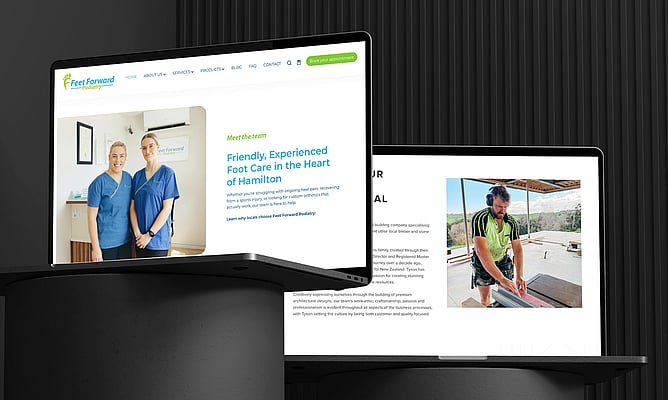
For a small business, this is a bigger deal than it sounds. A plumber in Auckland with six real job photos on their website has more chances to show up than a competitor using stock photos of a spanner. The photos are building trust with real customers who land on your site, as well as giving Google something specific to surface.
You don't need a professional photographer (but it certainly helps!). You need sharp, well-lit photos of your actual work (before-and-afters for tradies, finished projects for builders, real food for cafes). A 30-second video walkthrough of a completed job or a quick intro to your team does the job too. Check out our guide for taking great photos.
It's worth being honest about where professional photography earns its keep though. Getting found is one thing, winning the job is another. For higher-value work like a new build, a full rewire or a re-roof, professional images usually convert better than phone snaps, because the customer is making a big decision and the look of your photos says a lot about the standard of your work. Good DIY photos will get you in the game. Professional photography is often worth the spend when the job, and the customer's expectations, are bigger.
On Rocketspark, adding photos and galleries to your site is straightforward. Once they're up with a short description, the content starts working for you in search.
A Simple Habit to Build
Next time you finish a job you're proud of, take five photos before you pack up. Add them to your site with a one-sentence description. Over time, that builds into a real library of content that works hard in search and costs nothing but a few minutes.
Sort your local details: it takes a weekend
When someone types into Google (or asks an AI tool) "plumber near Whangarei" or "florist near Ponsonby", the businesses that come up are the ones with strong local signals. That means consistent, accurate information across the web, not just on your website.
It also means making it obvious on your own site, and this is where a surprising number of businesses fall down. Think of the electrician who builds a tidy-looking site but never actually says which town they're in or how far they'll travel. A customer can't tell if they cover their suburb, and an AI tool trying to recommend a local sparky has nothing to go on. If your home page doesn't answer "where are you and who do you serve", you're invisible for the exact searches you want to win.
Here's what Google is looking for:
An accurate, up-to-date Google Business Profile with photos, hours and services listed
A clear services and locations page on your website
Your name, address and phone number consistent across your site, Google, social profiles and any directories
Real reviews and responses to them.
If you're a tradie, you've got your van sign, your invoice footer and your reputation around town. The online version of that is your Google Business Profile and your services page. If a customer finds your name and searches for it but not much information comes up, now is a great time to fix it.
This is one of the most actionable SEO fixes for small businesses. Most of it can be done in a weekend, it costs nothing and it has a direct impact on whether you show up in local search results and on Google Maps. Set up or update your Google Business Profile at business.google.com. It's free and straightforward.
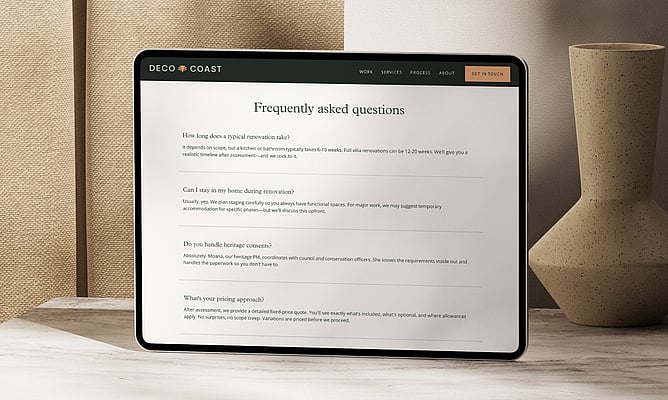
Frequently Asked Questions
Is SEO still worth doing now that there are AI search results?
Yes. Google's own guide confirms that the businesses appearing in AI results are the same ones doing the SEO fundamentals well. If anything, the basics matter more now, as they support visibility across both traditional search and AI-generated results.
How do I show up in AI Overviews?
There's no direct way to optimise for AI Overviews, as they're generated automatically from Google's existing index. The best approach is to make sure your site is properly indexed, your content is clear and genuinely useful and your business information is accurate. This is the same work that helps you rank in regular results too.
Do I need an llms.txt file?
Not for Google. Google's guide is clear that llms.txt files don't do anything for its own AI features, so you don't need one to show up in Google's AI results.
That said, an llms.txt file isn't useless. It's a small file that tells AI tools what your business does and which pages matter, and some AI assistants like ChatGPT, Claude and Perplexity can use it to understand your site. It's a quick thing to add rather than a must-have. If you're on Rocketspark you can paste yours in a few clicks, so it's worth having in place even if Google itself doesn't read it.
Is using ChatGPT to help write my website content bad for SEO?
Not if you use it as a starting point. The problem isn't using AI to help draft content, it's ending up with something generic that could have been written about any business anywhere. If you use an AI tool to draft something and then add your real experience, specific examples and local detail, that's fine. The goal is content that sounds like you, not content that sounds like everyone else.
If you're on Rocketspark, Flint AI is built for exactly this. It gives you a draft to work from, and your job is to layer in the specifics that turn a generic draft into something only your business could have written.
How do I check whether my website is indexed by Google?
Go to Google and search for site:yourdomain.co.nz. If your pages come up, you're indexed. For more detail, set up a free Google Search Console account.
Rocketspark's support hub has a walkthrough on connecting it to your site.
Do I need a Google Business Profile if I already have a website?
Yes, they work together. Your website gives Google detailed information about your business and your Google Business Profile is what puts you on the map for local searches and Google Maps results.
How long does it take for SEO to start working?
Usually three to six months before you see meaningful movement in rankings. Some changes, like fixing indexing issues or refreshing your Google Business Profile, can have a faster impact. Think of SEO as less like flicking a switch and more like planting a garden. The earlier you start, the sooner it pays off.
Why does AI sometimes show the wrong information about my business?
Usually because it's pulling from outdated sources. AI tools reference directories, review sites and old articles alongside your own website, so if there's stale information about you floating around (an address you've moved from, an old phone number, hours that have changed), AI can repeat it as fact. Search your business name and see what comes up. Then update or request the removal of anything out of date. The more consistent and current your details are across the web, the better the chance AI gets your facts straight.
Start with one thing this week
There's a lot in this article, and if you try to tackle all of it at once you'll probably end up doing none of it. So pick one thing.
If you haven't claimed or updated your Google Business Profile, start there. It's free, takes an afternoon and directly affects whether you show up in local results and on Maps.
If you're already on Google Business, spend an hour on your services page. Rewrite it so it sounds like you by adding a real example of a job, using an actual photo or mentioning the suburbs or towns you work in. That one page is probably doing less than it could be.
And if you want the technical side sorted without the hassle (the mobile optimisation, the page speed, the secure setup) that's exactly what Rocketspark is built to handle, so you can focus on the content and the customers.
SEO basics for small business in NZ haven't changed as much as you might have been led to believe. It's a handful of things, done consistently, over time. The AI search era rewards the same businesses that good SEO has always rewarded: the ones that are genuinely useful, specific and easy to find.